The invented ones
Why are diamonds the engagement ring?
Because De Beers paid for it. In 1938 the diamond cartel hired the Philadelphia agency N. W. Ayer to make the diamond engagement ring, in the agency’s own words, "a psychological necessity." In 1947 copywriter Frances Gerety wrote "A Diamond Is Forever." About one in ten American brides got a diamond ring in 1939; by 1990, eight in ten. Japan went from under five percent to sixty in thirteen years.
Every jeweler will tell you the diamond engagement ring began in 1477, when Archduke Maximilian of Austria gave one to Mary of Burgundy.1 Maybe he did; no museum holds the ring, and the story is told by trade bodies rather than documents. What happened in the four and a half centuries after is the part that matters, and it is short. Almost nobody bought one. Then, in 1938, somebody decided they would.
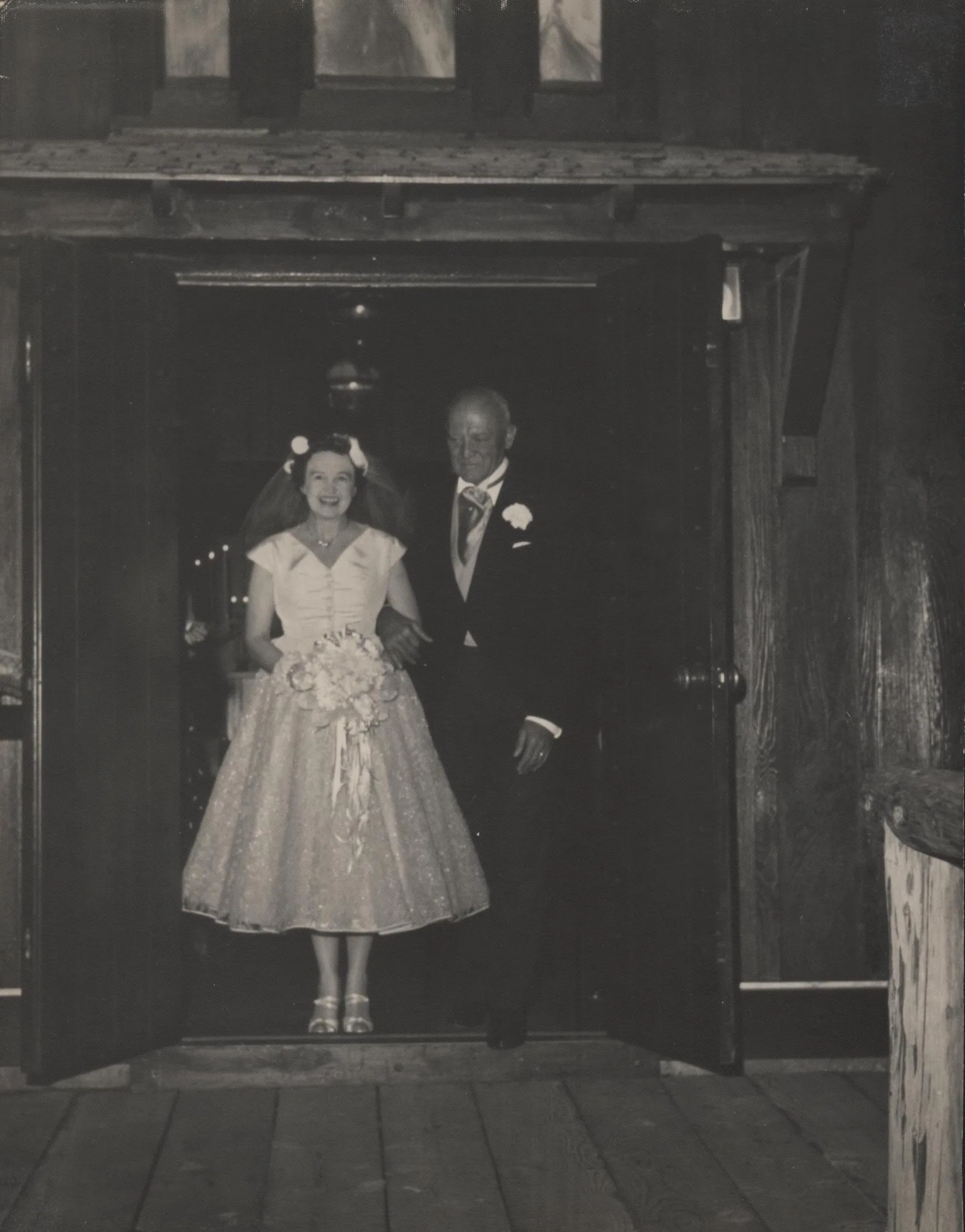
.jpg)
A problem in mass psychology
That year a representative of De Beers, the company that controlled most of the world's rough diamonds, wrote to N. W. Ayer & Son in Philadelphia to ask whether advertising might lift American diamond sales.2 Ayer's plan, uncovered by the journalist Edward Jay Epstein in the agency's own files, did not talk about beauty. "We are dealing with a problem in mass psychology," the agency wrote. "We seek to... strengthen the tradition of the diamond engagement ring, to make it a psychological necessity capable of competing successfully at the retail level with utility goods and services."3
The method was envy. Ayer would "spread the word of diamonds worn by stars of screen and stage, by wives and daughters of political leaders, by any woman who can make the grocer's wife and the mechanic's sweetheart say 'I wish I had what she has.'"3 By 1941 the agency reported that diamond sales in the United States had risen 55 percent since 1938, "reversing the previous downward trend in retail sales."3
Four words, after three in the morning
The line came in 1947. Frances Gerety, an Ayer copywriter working late on the De Beers account, was asked by her boss for a signature line by morning, and she wrote "A Diamond Is Forever."2 It ran from 1948 on, and at the end of the century Advertising Age named it the slogan of the twentieth century.24 Gerety herself never married.2
Later campaigns supplied the arithmetic. De Beers ads suggested a month's income for the ring in the 1930s and pushed it to two months' salary in the 1980s, three in Japan.5 There is no rule. There was a media buy.
The numbers
By one industry estimate, about 10 percent of American brides received a diamond engagement ring in 1939. By 1990 it was 80 percent.67 The cleanest experiment was Japan. In 1967 De Beers hired J. Walter Thompson "to popularize diamond engagement rings in Japan," a country with, in Epstein's words, "no tradition for romance, courtship, seduction and prenuptial love" as the West sold it, "and no tradition that required the gift of a diamond engagement ring."8 When the campaign began in 1968 fewer than 5 percent of Japanese brides received a diamond. By 1981 about 60 percent did.8 A Christian Science Monitor review of Epstein's book put it the same way in 1982: before the late sixties Japanese culture "was innocent of engagement jewelry."9
The invention is far more than merely a monopoly for fixing diamond prices; it is a mechanism for converting tiny crystals of carbon into universally recognized tokens of power and romance.Edward Jay Epstein, The Rise and Fall of Diamonds, 19828
Why your mother cares
Your grandmother, if she married in the fifties, was in the first generation for whom the diamond was already what Ayer wanted it to be: not a choice but a given. The wartime industry had tied "the diamond engagement ring, the double-ring ceremony, and the formal white wedding gown" to "democracy and American prosperity."10 Your mother got the two-months'-salary rule in the eighties, and probably believed it was etiquette.5 Neither of them was foolish. They were the audience. When your mother looks at your hand, she is checking a box she did not know was drawn by an agency in Philadelphia, and the kindest thing you can do is know that before you decide what to put there.
The envy engine ran on magazine pages and newsreels. It worked on people who would never see a stranger's hand up close.
Asked at the desk
Who started the diamond engagement ring tradition?
In its modern form, De Beers and the advertising agency N. W. Ayer, beginning in 1938. The 1477 Maximilian story is told by trade bodies and has no documented ring behind it.13
Who wrote "A Diamond Is Forever"?
Frances Gerety, a copywriter at N. W. Ayer, in 1947. It first ran in 1948 and she never married.24
Is the two-months’-salary rule real?
It is an advertising suggestion. De Beers ads proposed one month’s income in the 1930s, two months in the 1980s, and three in Japan.5
The receipt
- American Gem Society, "The History of the Diamond as an Engagement Ring." americangemsociety.org · GIA, "The Origin of Wedding Rings: Ancient Tradition or Marketing Invention?" 4cs.gia.edu
- WBUR, Here & Now, "The Ad-Woman Who Made Diamonds ‘Forever’," with J. Courtney Sullivan, 26 July 2013. wbur.org
- Edward Jay Epstein, "Have You Ever Tried to Sell a Diamond?", The Atlantic, February 1982. theatlantic.com (Ayer memo quoted as reproduced at kottke.org)
- Wikipedia, "Frances Gerety," citing Advertising Age, 29 March 1999. en.wikipedia.org
- Wikipedia, "Engagement ring," on the salary guideline, citing Laurence Cawley, "De Beers myth: Do people spend a month’s salary on a diamond engagement ring?", BBC News, 16 May 2014. en.wikipedia.org
- Statista, "Share of brides who received a diamond engagement ring in the United States from 1939 to 1990," 2012. statista.com
- GIA, "The Origin of Wedding Rings," on the 10 to 80 percent figure. 4cs.gia.edu
- Edward Jay Epstein, The Rise and Fall of Diamonds (Simon & Schuster, 1982), prologue. text at 24carat.co.uk
- Barbara Phillips, "Is the diamond mystique about to crumble?", Christian Science Monitor, 7 July 1982. csmonitor.com
- Vicki Howard, Brides, Inc.: American Weddings and the Business of Tradition (University of Pennsylvania Press, 2006), publisher’s description. pennpress.org
Shelved 2026-09-05 · back to the wall