Around the world
Why is a glass broken at a Jewish wedding, and what is a chuppah?
The glass goes back to the Talmud, where Mar bar Ravina and Rav Ashi each broke a valuable cup at a son’s wedding when the rabbis grew "excessively joyous." Medieval commentators made it the source of the custom; by the fourteenth century it also stood for the destruction of the Temple. The biblical chuppah is a chamber; the cloth canopy on four poles was new in the 1500s.
At the end of a Jewish wedding the groom (or both partners) stamps on a glass, everybody shouts "Mazel tov!", and someone at the table explains that it is for the destruction of the Temple. That explanation is real and old. It is also not the first one, and the first one is about a party that got out of hand.
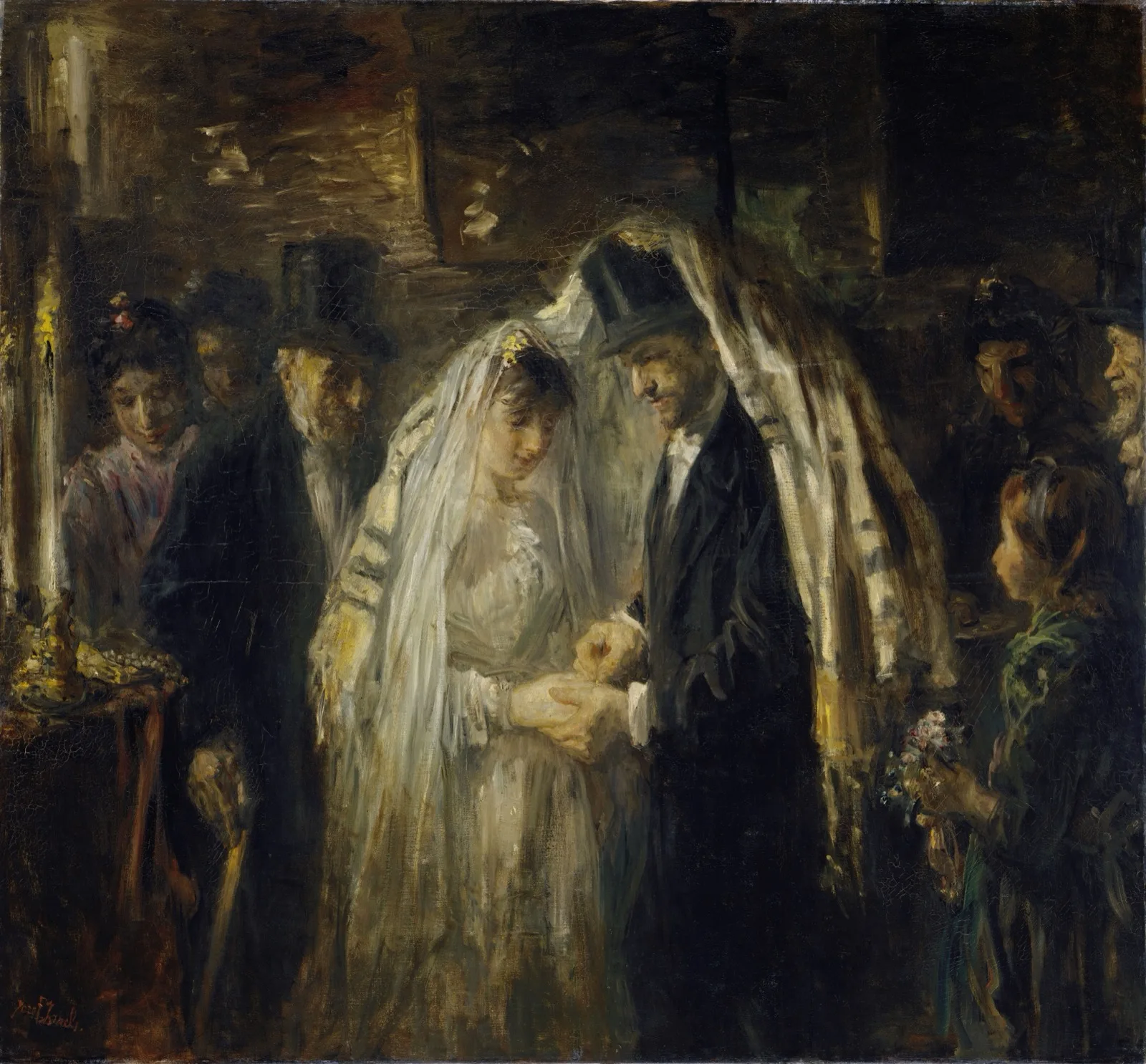

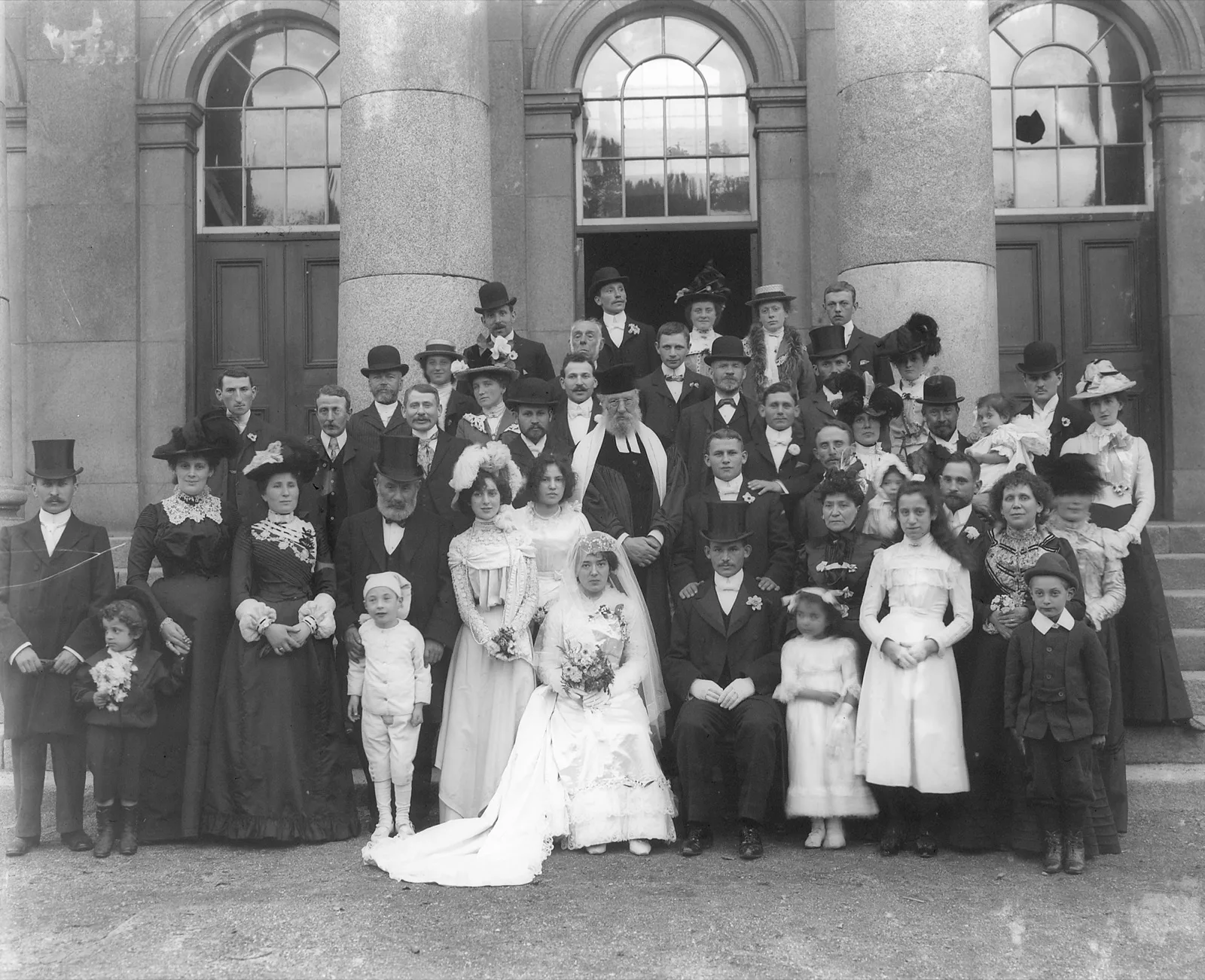

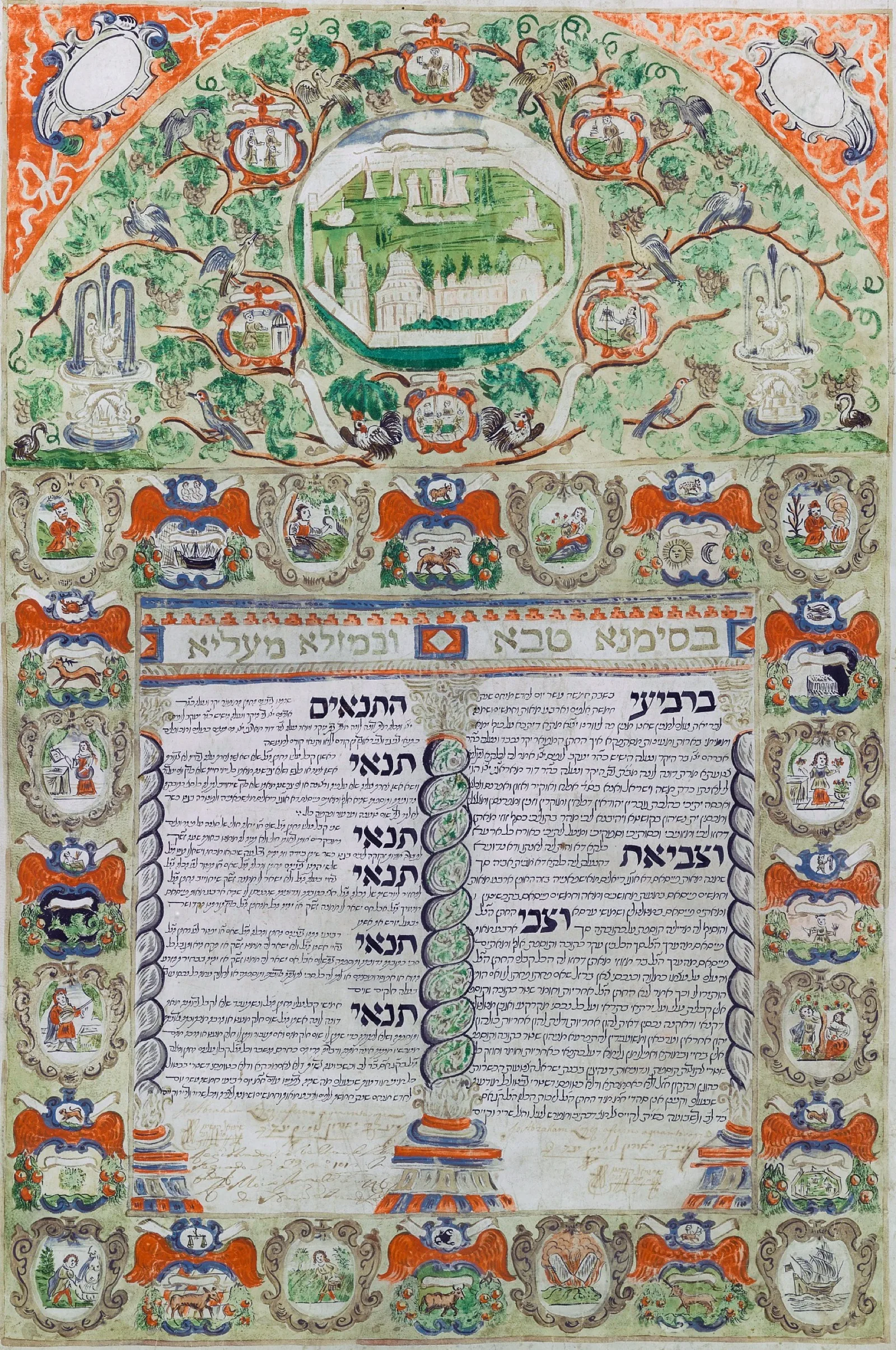

Two cups, two fathers
The Talmud, tractate Berakhot, is discussing the verse "rejoice with trembling" when it tells the story.1 "Mar, son of Ravina, made a wedding feast for his son and he saw the Sages, who were excessively joyous. He brought a valuable cup worth four hundred zuz and broke it before them and they became sad."2 The next line repeats it: "Rav Ashi made a wedding feast for his son and he saw the Sages, who were excessively joyous. He brought a cup of extremely valuable white glass and broke it before them, and they became sad."2 At the same feast a rabbi asked to sing gave the room "Woe unto us, for we shall die," and made the guests answer, "Where is Torah and where is mitzvah that protect us?"2 Joy, with a hand on the brake.
The medieval commentators known as Tosafot are the first to write that this is where the wedding custom comes from: "from here they were accustomed to break glass at weddings."3 The Temple meaning attaches afterward. The sixteenth-century Shulchan Aruch prescribes ashes on the groom's head "in memory of the mourning of Jerusalem," and Rabbi Moses Isserles's gloss notes that "there are places where it is customary to break a glass after the sheva brachot... and this is the tradition in our lands."4 A rabbi writing for the Orthodox Union sums up the layering: the glass "took on the additional role of serving as a reminder" of the Temple's destruction.5 Both meanings are true. One is older.
What the chuppah was
In the Bible the chuppah is a room. Psalm 19 has the sun "like a groom coming forth from the chamber," and Joel calls the bride out "from her canopied couch"; the Hebrew word in both is chuppah.6 In the Talmudic period it was the chamber where the marriage was consummated.7 There is one lovely exception: in Beitar, the Talmud says, families planted a cedar at a boy's birth and a cypress at a girl's, "and when they would marry they would cut down these trees and construct a wedding canopy for them with their branches."8
The cloth on four poles is early modern. Isserles again, in the 1500s: "The custom is widespread now: to call the chuppah that place where a spread curtain is brought in, held high by poles, under which the bride and groom are led in public."9 Rabbi Maurice Lamm draws the conclusion: the tapestry canopy "was first identified by Rabbi Moses Isserles in the sixteenth century, and we must assume that it was relatively new in his time."10 It may have grown out of spreading a prayer shawl over the couple.7 What it means now is settled: four open sides, like the tent of Abraham "that had entrances on all four sides to welcome wayfarers," a home "filled with chesed."11
And "Mazel tov"
The shout comes the instant the glass breaks: "Everyone exhales, claps and shouts, 'Mazel tov!' The celebration begins."12 The phrase means "good constellation," and it is a statement that something good has happened, not a wish that it will.13 Some rabbinic authorities have never liked the timing, a cheer at the moment of mourning.5 The crowd has not listened for several hundred years.
Why your mother cares
Because the canopy is the house. Lamm calls it "the groom's home, and the bride's new domain," and notes that of all the old wedding symbols "only this canopy symbol survived."10 If your mother wants a chuppah made from her father's tallit, she is doing what the rabbis think the first canopies were. If she wants the glass wrapped in a cloth from her own wedding, she is doing what Isserles's neighbors did. The layers are the tradition.
A cup worth four hundred zuz went on the floor at a feast fifteen centuries ago. The record is a page in the Talmud. It was enough.
Asked at the desk
Why is the glass broken at a Jewish wedding?
In the Talmud, two fathers broke valuable cups at their sons’ weddings to calm rabbis who were "excessively joyous." Later authorities tied the custom to remembering the Temple’s destruction.25
What does a chuppah symbolize?
The couple’s home, open on four sides like Abraham’s tent. In the Bible the word means a chamber; the canopy on poles is documented from the 1500s.911
What does "mazel tov" mean?
"Good constellation," used as a statement that something good has happened rather than a wish for luck.13
Can both partners break the glass?
Many couples do; the Talmudic stories are about a host breaking a cup, not a groom, so there is no ancient rule about who stamps.2
The receipt
- Babylonian Talmud, Berakhot 30b (William Davidson / Steinsaltz English), Sefaria. sefaria.org
- Babylonian Talmud, Berakhot 31a, Sefaria. sefaria.org
- Tosafot on Berakhot 31a:2, Sefaria. sefaria.org · English rendering in Yaakov Schiff, "Gilu BeRe’adah, Part Two," Kol Torah. koltorah.org
- Shulchan Arukh, Even HaEzer 65:3, with the gloss of Rabbi Moses Isserles, Sefaria. sefaria.org
- Rabbi Dr Ari Z. Zivotofsky, "What’s the Truth About… Breaking a Glass at a Wedding?", Jewish Action (Orthodox Union), Winter 2020. jewishaction.com
- Psalms 19:6 and Joel 2:16 (JPS), Sefaria. Psalms · Joel
- Central Conference of American Rabbis, Responsa topic "Huppah." ccarnet.org
- Babylonian Talmud, Gittin 57a, Sefaria. sefaria.org
- Shulchan Arukh, Even HaEzer 55:1, gloss of Rabbi Moses Isserles, Sefaria. sefaria.org
- Rabbi Maurice Lamm, "Chuppah: The Bridal Canopy," Chabad.org. chabad.org
- Dr Michael Kaufman, "The Huppah," My Jewish Learning. myjewishlearning.com
- Anita Diamant, "Breaking the Glass at a Jewish Wedding," My Jewish Learning. myjewishlearning.com
- Wikipedia, "Mazel tov," citing Joshua Trachtenberg, Jewish Magic and Superstition. en.wikipedia.org
Shelved 2026-09-05 · back to the wall