From the kitchen
What are cake-cutting and corkage fees, and can you refuse them?
Both are the venue charging you for the labor of serving something you bought elsewhere. Corkage is an 1838 hotel word; cakeage was a joke in 1985 that stuck. Typical cake fees run $1 to $3 a slice, and in Florida the fee is taxed. Neither is a law of nature: ask for it to be waived before you sign, or bring the dessert as a station.
What are cake-cutting and corkage fees, and can you refuse them?
Two fees on a venue contract exist to make the thing you bought elsewhere cost a little more. One of them has a two-hundred-year pedigree. The other started as a newspaper joke about the first one.
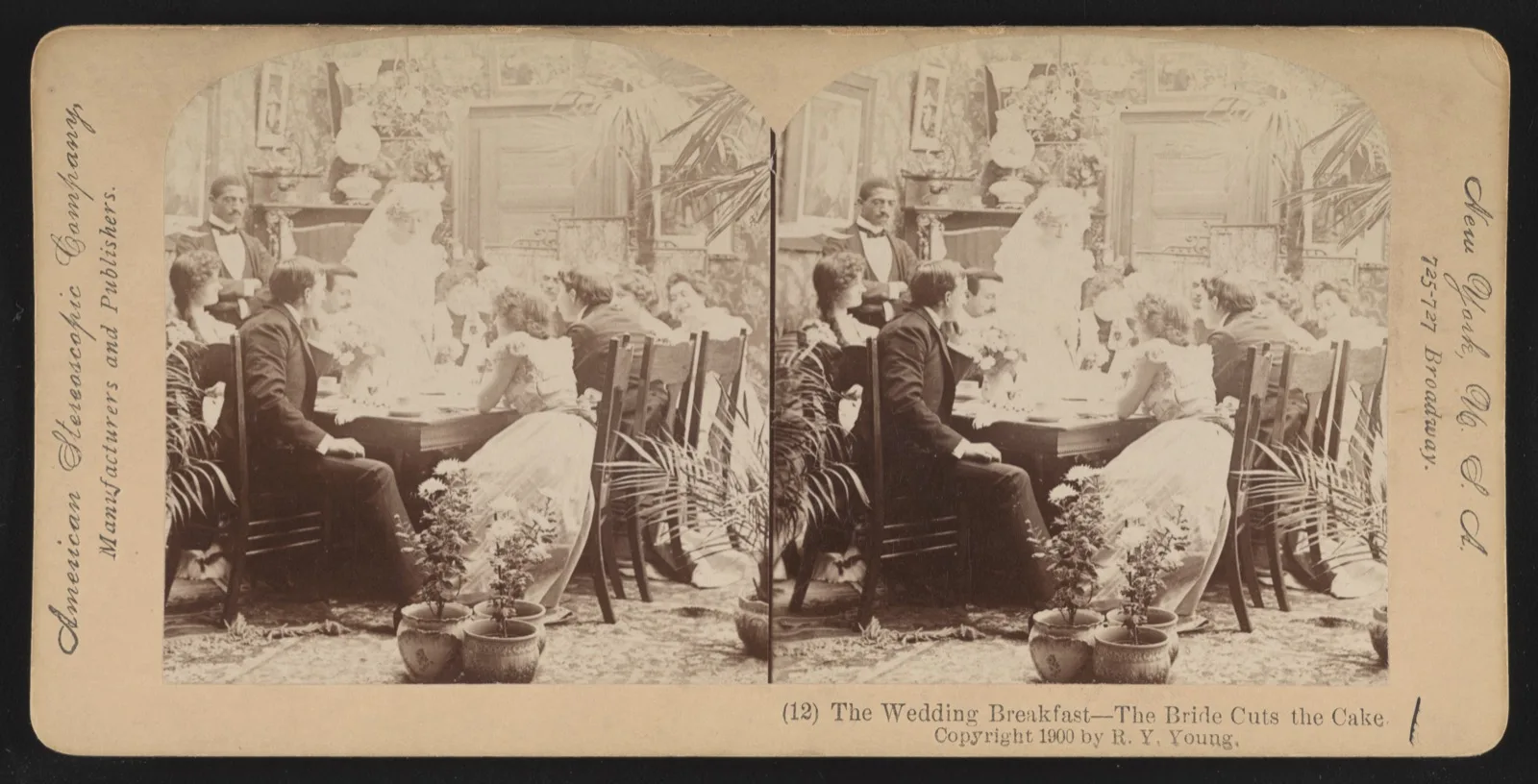
Corkage: the old one
The word is documented from 1838, meaning the corking or uncorking of bottles and, by extension, "a charge by hotels for serving wine not supplied by the establishment."1 Its logic has not changed: you brought the wine, the house still has to open it, pour it, chill it and wash the glass, and it would rather have sold you its own. On a wedding contract corkage shows up when a couple wants to bring a case from the vineyard where they met, and it is priced per bottle so that the case costs what the venue's own wine would have. In Florida it is taxed with the rest of the bill: "corkage fees, setup fees, or similar charges… are subject to tax."2
Cakeage: the joke that stuck
The earliest print use found is Australian. On 3 August 1985 the Sydney Morning Herald reported a group who brought a cake to a restaurant: "The restaurant put candles on it, cut it up and served it. The group was astounded when the bill included a charge for 'Cakeage—$36.'"3 Melbourne's The Age had a brasserie charging a dollar a head in 1987.3 In September 1991 Herb Caen, in his syndicated San Francisco column, told readers that "if you bring your own birthday cake, you could be charged a cakeage fee. At Green's for instance, it's $1.50 a person."3 Caen was being funny, and the word was "coined after corkage."3 Thirty years on, a food site found The Knot reporting the average wedding cake-cutting fee at exactly Caen's number, $1.50 a person, and venues explaining it as the time to cut and plate, the dishes, the washing up and the dessert they did not get to sell you.4 A 2026 marketplace puts the range at $1 to $3 a slice.5
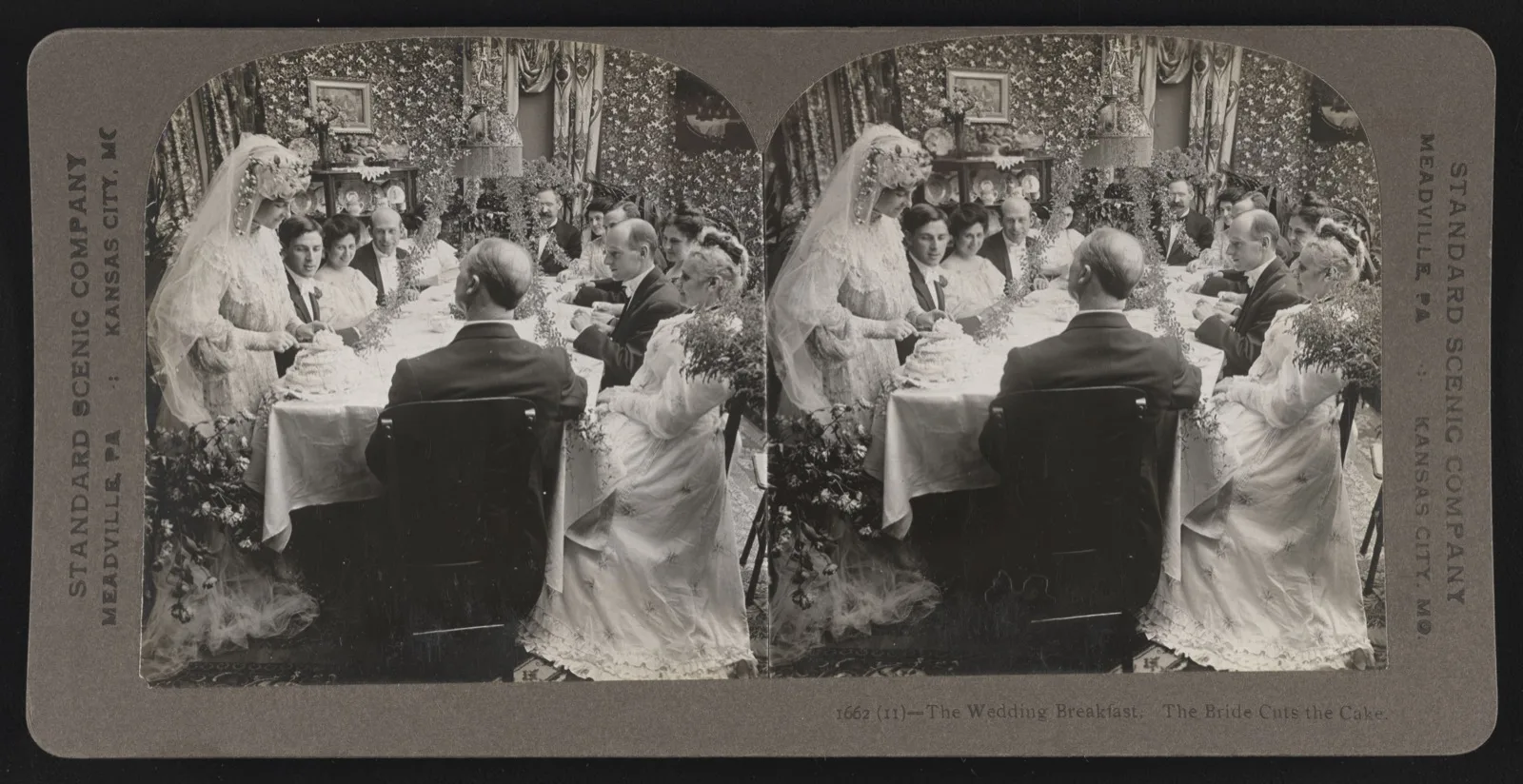
What the fee is actually for
Labor and lost sale, in that order, and the labor part is real: a wedding cake is cut in the kitchen into a hundred even slices by someone who is not doing something else, plated, and walked out, and a hundred plates and forks come back to be washed. The lost-sale part is the venue's business, not yours. The fee is negotiable precisely because it is not a cost the venue incurs until you sign, and a venue that wants your date will often strike it or fold it in. The author's own 2026 hotel order lists "Client's Provided Cake" inside the dinner package and carries no cutting line at all.6 It also carries a rule worth knowing before you plan a dessert table: "any remaining food after (90) minutes of display must be promptly removed and discarded by hotel team. Hotel does not permit leftovers to be taken off the premises."6 The top tier you meant to freeze is a conversation to have before the day.
Why your mother cares
Her cake was cut by an aunt with the venue's knife, and nobody billed anyone. The fee arrived with the professionalized reception, when the cake became a vendor's product and its cutting became a venue's service. She is right that it is a strange thing to pay for. She is wrong that you cannot get out of it. Ask before you sign, and if the venue will not waive it, price it against the venue's own dessert; sometimes the house cake with no fee costs less than the outside cake with one.
Before the fee there was a knife on the table and a relative who knew how to use it. The venue joined the cutting when the cake became something you bought from someone else.
Asked at the desk
How much is a cake-cutting fee?
A 2026 marketplace range is $1 to $3 a slice; The Knot’s reported average is $1.50 a person, which happens to be the exact figure in the 1991 column that named the fee.345
Can you negotiate a cake-cutting fee?
Yes, before you sign. It is a charge for labor the venue has not yet done, and venues waive it to win a date, when you use their baker, or when the cake is served as a self-serve display. One 2026 hotel order lists the client’s own cake with no cutting line.6
What is a corkage fee?
A per-bottle charge for opening and serving wine you bring rather than buy from the house. The word dates from 1838 as a hotel charge.1
Where does the word cakeage come from?
It was modeled on corkage. The first print use found is the Sydney Morning Herald, 3 August 1985; Herb Caen popularized it in San Francisco in 1991.3
The receipt
- Online Etymology Dictionary, "corkage." etymonline.com
- Florida Administrative Code Rule 12A-1.0115(7)(c) and (d). flrules.org
- Pascal Tréguer, "‘cakeage’: meanings and origin," word histories, 15 October 2021, quoting the Sydney Morning Herald, 3 August 1985; The Age, 17 February 1987; and Herb Caen’s column as syndicated in the Honolulu Advertiser, 14 September 1991. wordhistories.net
- Jennifer Mashuga, "What, Exactly, Is a Cake-Cutting Fee?", Mashed, 2 September 2023, reporting The Knot’s average of $1.50 a person and venues’ stated reasons. mashed.com
- Zola, "Wedding Catering Costs: Real Numbers and Budget Tips," updated 19 February 2026. zola.com
- Banquet event order for the author’s own wedding at a Florida hotel, printed 31 October 2025 for 14 March 2026, pages 2 and 4. In the author’s files; the venue is not named because no vendor is named in this house.
Shelved September 5, 2026 · back to the bar