The rebranded ones
Where does the word "honeymoon" come from?
From a joke. "Honeymoon" first appears in English in 1546, and a 1552 dictionary spells out the meaning: newlyweds love each other "exceedingly" at first, and that love is expected to wane like the moon. The trip came later, around 1800, when wealthy couples toured relatives and then Niagara Falls. The story about drinking mead for a month was invented in the 1800s and has no source.
Somebody at your rehearsal dinner will explain that "honeymoon" comes from an old custom of drinking honey wine for a full cycle of the moon after the wedding. Nod politely. Then know this: the word is older than that story by three hundred years, and it was never a compliment.

.jpg)
1546: "it was yet but hony moone"
The first time the word turns up in print is in a London collection of proverbs by John Heywood in 1546: "Abide (quoth I) it was yet but hony moone."1 Six years later Richard Huloet's English-Latin dictionary defined it, and the definition is the whole joke. Honey moon, he wrote, is "a terme prouerbially applied to such as be newe maried, whiche wyll not fall out at the fyrste," because at the beginning "thone loueth the other... excedyngly," and that exceeding love is expected "to aswage."2 Honey for the sweetness, moon for the waning. Samuel Johnson kept the sense in 1755: "The first month after marriage, when there is nothing but tenderness and pleasure."3
There is no month in the original. The moon is not a calendar. It is a warning that the sweetness is "no sooner full than it begins to wane."4
Where the mead came from
The mead story arrives in the nineteenth century, in the pages of Victorian popularizers who claimed it was the custom "of the higher order of the Teutones to drink Mead" for thirty days after every wedding.5 No dictionary supports it. The etymologists who have looked list only honey and moon, and Huloet's 1552 definition, written before any of those Victorians were born, already treats the word as a proverb about love cooling.6 The mead is a story about a word, told by people who liked the word better than its meaning.
Then somebody went somewhere
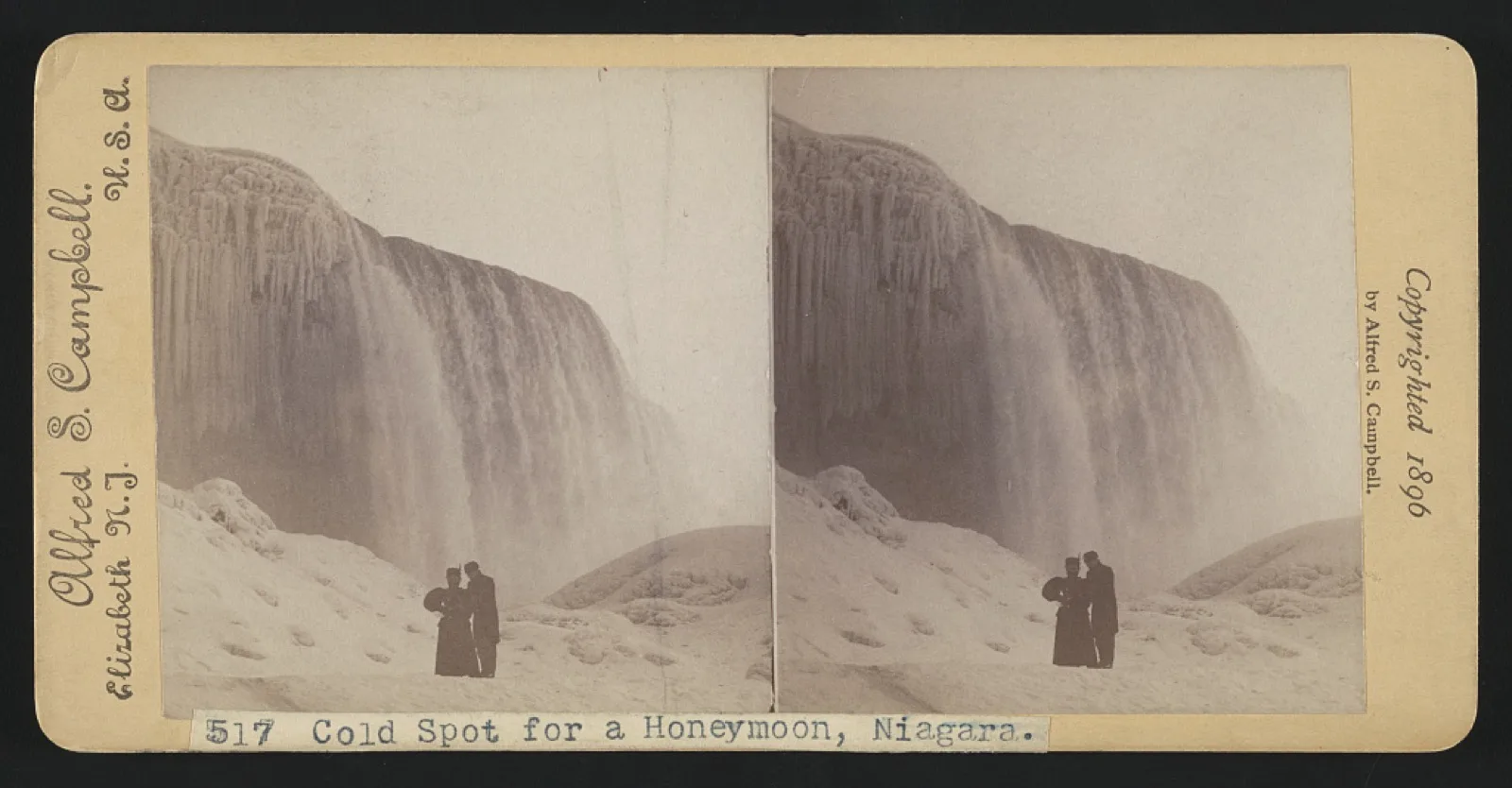
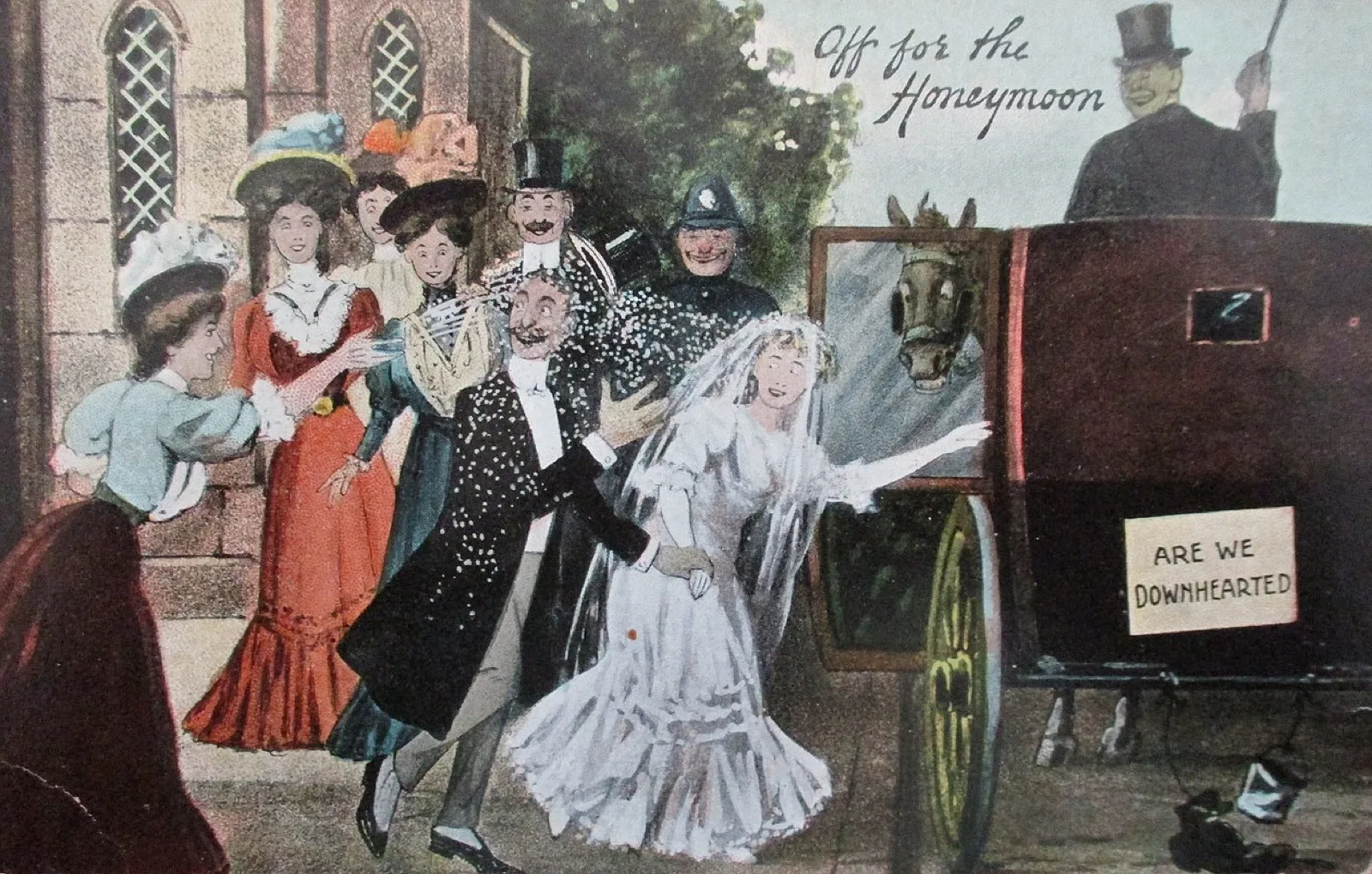
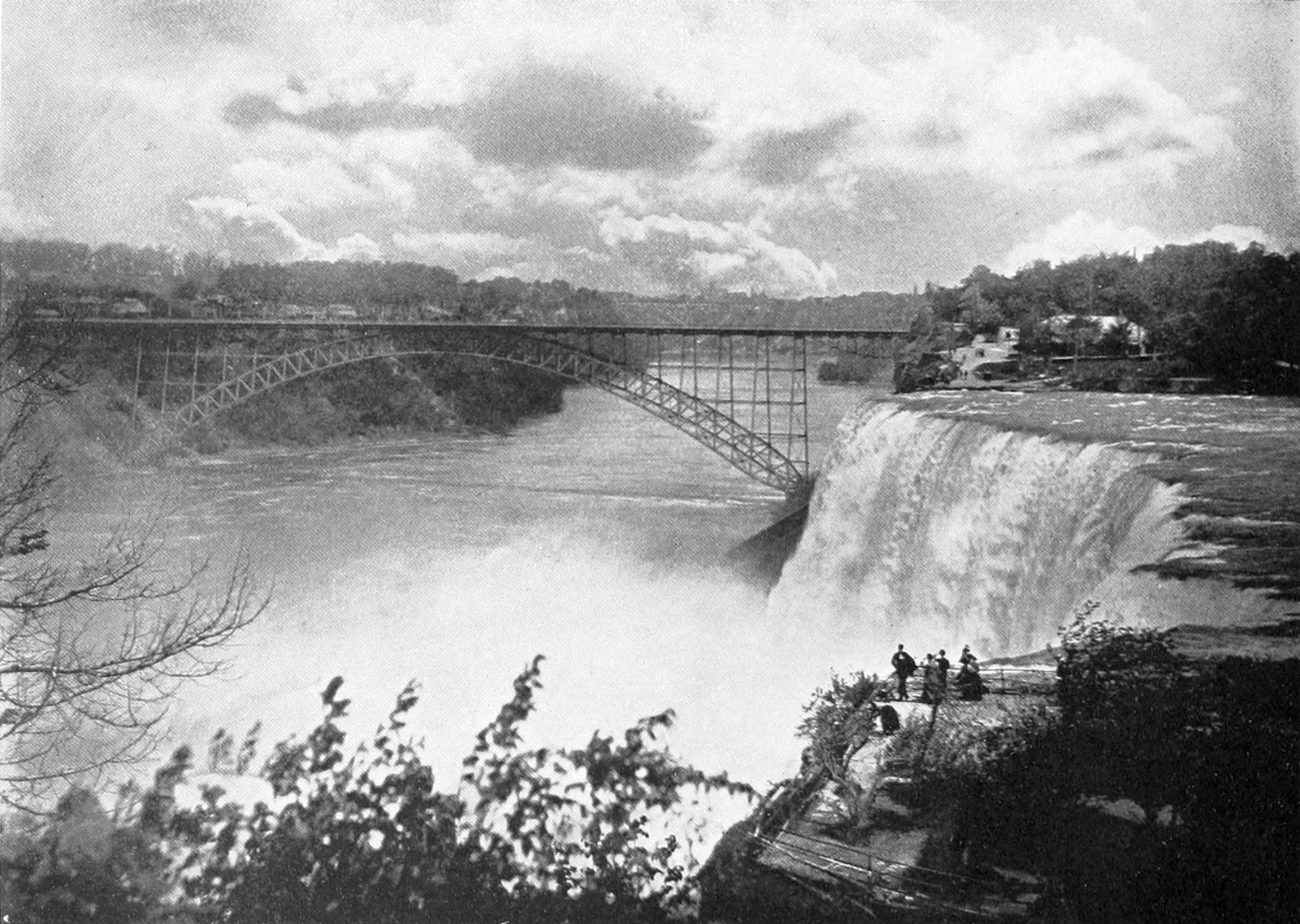
The trip is a separate invention. The travel sense of "honeymoon" settles in around 1800, and the verb, to honeymoon, is first recorded in 1821.6 In America the wealthy set off on "bridal tours," sometimes with family along, to visit relatives and show the new couple around.7 In 1801 Theodosia Burr, the Vice President's daughter, rode with her new husband from Albany to Niagara Falls on hers.8 Napoleon's brother Jérôme followed a few years later.8 When the railroads made travel cheap in the 1860s, the middle class went too, and the honeymoon stopped being a word and became a place.7
Niagara held the title for a century. It stayed popular from the 1930s through the 1950s partly for the scenery and partly for the anonymity it gave to shy couples.7 In 1953 Hollywood released Niagara, and the poster painted Marilyn Monroe as the waterfall itself.8 By 1960 the Poconos were drawing over a hundred thousand couples a year, and a former submarine electrician named Morris Wilkins had drawn the first heart-shaped bathtub in his basement.9 By the end of that decade Niagara had lost its hold and never got it back.10
Why your mother cares
For your parents' and grandparents' generation the honeymoon was the first thing a new couple did in public. In the 1950s it became "a means for middle-class couples to display their prosperity," and by the 1960s the package tour to Hawaii or the Caribbean was the thing to book.7 A historian who studied Niagara's honeymoon trade found reporters in the fifties watching "besotted honeymooners do silly things in public," because the trip was a performance of being married.11 When your mother asks where you are going, she is asking a question her mother was asked.
The word was a proverb about love cooling before there was a camera to catch the sunset.
Asked at the desk
Did people really drink mead for a month after a wedding?
There is no evidence for it. The claim appears in nineteenth-century books and has no earlier source. The word already meant love that wanes in 1552.25
When did honeymoons become trips?
Around 1800. The verb "to honeymoon" is first recorded in 1821, and wealthy American couples were taking "bridal tours" by the 1840s.67
Why was Niagara Falls the honeymoon capital?
Early celebrity visitors, starting with Theodosia Burr in 1801, and later the railroads. It stayed popular through the 1950s and lost its hold in the 1960s.810
Does a honeymoon have to be a month?
It never was. The moon in the word is an image of waning, not a unit of time.4
The receipt
- John Heywood, A dialogue conteinyng the nomber in effect of all the prouerbes in the englishe tongue (London: Berthelet, 1546), transcribed by Pascal Tréguer, "history of the noun honeymoon," wordhistories.net, 2020. wordhistories.net
- Richard Huloet, Abecedarium Anglico Latinum (London: Riddell, 1552), transcribed at wordhistories.net, above. wordhistories.net
- Samuel Johnson, A Dictionary of the English Language (1755), "Honey-moon," quoted at wordhistories.net, above. wordhistories.net
- Oxford English Dictionary, "honeymoon, n.," as quoted in Wikipedia, "Honeymoon." en.wikipedia.org
- Wikipedia, "Honeymoon," on the nineteenth-century mead theory (Pulleyn 1853, Brewer c. 1870) and its challenges. en.wikipedia.org · Michael Quinion, "Honeymoon," World Wide Words. worldwidewords.org
- Douglas Harper, Online Etymology Dictionary, "honeymoon." etymonline.com
- Katherine Lehman, "Honeymooning," Encyclopedia of Recreation and Leisure in America (2004), via Encyclopedia.com. encyclopedia.com
- Matthew Wills, "Falling for Niagara Falls," JSTOR Daily, 18 November 2016. daily.jstor.org
- Susan Spano, "Passion in the Poconos," Smithsonian, June 2012. smithsonianmag.com
- Mitch Primeau, review of Karen Dubinsky, The Second Greatest Disappointment (1999), ActiveHistory.ca. activehistory.ca
- Pamela Coristine, review of Karen Dubinsky, The Second Greatest Disappointment, Ethnologies 24:2 (2002). erudit.org
Shelved 2026-09-05 · back to the wall