The ceremony itself
Why does the father give the bride away?
Because the 1549 Book of Common Prayer told the minister to ask "Who geveth this woman to be maried to this man?" and to receive the bride "at her father or frendes handes." Under English coverture a married woman’s legal existence was "suspended," in Blackstone’s words. The Church of England made the giving away optional in 2000. In 2023, 73 percent of American couples were still escorted by a father.
Most brides will be asked, at some point in planning, whether they want to be "given away," and most will hear that it comes from a time when women were property. That is close to true, and the sources are better than the slogan.
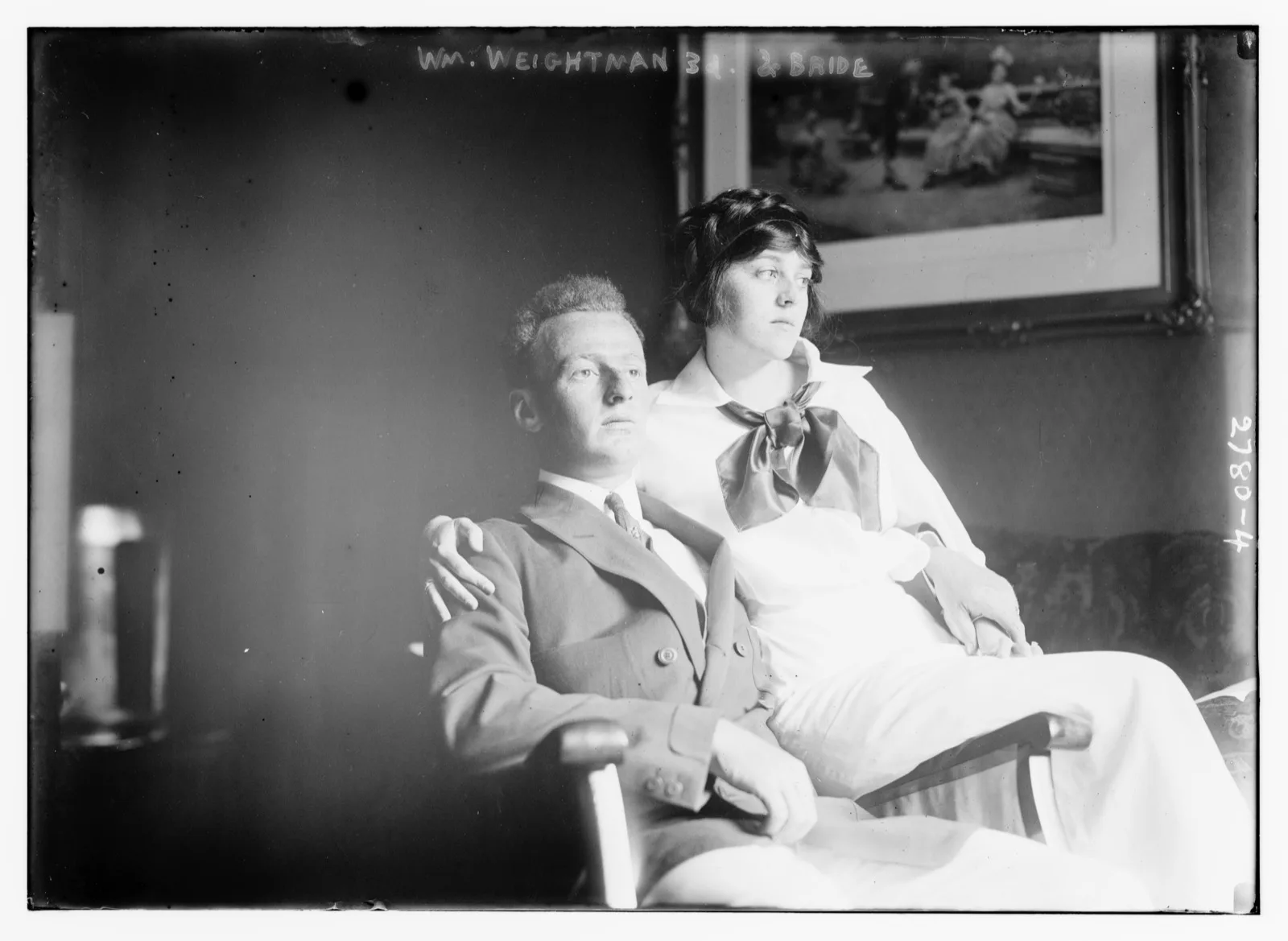
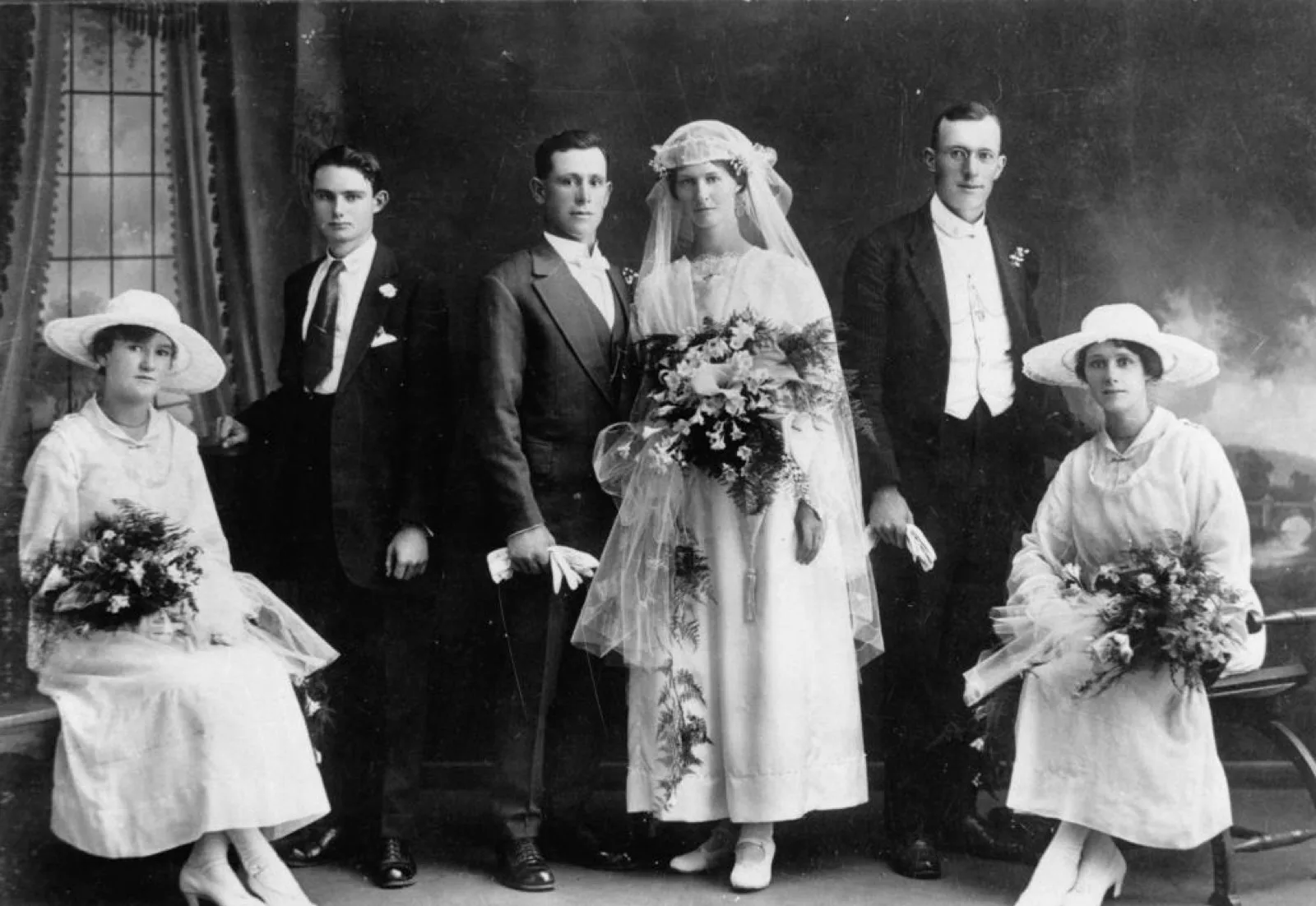

1549: the question
Thomas Cranmer's Book of Common Prayer, the first in English, set the words. "Then shall the Minister say, Who geveth this woman to be maried to this man?" And the rubric that follows: "the minister receiving the woman at her father or frendes handes: shall cause the man to take the woman by the right hande."1 The same service read wives a lesson: "Ye wives, submit yourselves unto your owne husbandes."1 The 1559 and 1662 books kept the question nearly word for word, and the 1662 text is still the Church of England's standard.23
What "giving" meant in law
The handing over was not just a gesture. Under the English doctrine of coverture, as William Blackstone summarized it in 1765, "the very being or legal existence of the woman is suspended during the marriage, or at least is incorporated and consolidated into that of the husband: under whose wing, protection, and cover, she performs every thing."4 The rubric came first, in 1549, and the practice of a father handing over his daughter is older than both; coverture is the legal world the question lived in, not its cause.
Rome was blunter. In the old form of Roman marriage the wife passed "into the hand" of her husband; the jurist Gaius says usus "brought the wife into the family of the husband, where it gave her the status of a daughter," and coemptio was "an imaginary sale" before five witnesses and a man holding a balance.5
2000: "This traditional ceremony is optional"
The Church of England's Common Worship marriage service, introduced in 2000, made the change in one sentence: "This traditional ceremony is optional."6 It also reworded the question to "Who brings this woman to be married to this man?" and allowed "the bride's father (or mother, or another member of her family or a friend representing the family)" to give her right hand to the minister.6 There is an alternative addressed to both sets of parents: "As their parents, will you now entrust your son and daughter to one another..."6 The main text of the service has no giving away at all; the couple "will each give their consent to the other."7
American Protestants had been using the old form for generations. A 1933 ministers' magazine printed three ceremony scripts; two kept the question, with the father answering "I do," and one dropped it.8 The choice has been on the table for ninety years.
What couples do now
Mostly the walk, without the words. The Knot's study of more than nine thousand couples married in 2023 found 73 percent were escorted down the aisle by a father.9 Clergy now tell couples plainly what the question was; one Anglican minister explained to a couple in 2009 that "many couples dispensed with this today since it was a throw back to when young women were seen as the property of their fathers."10 The industry offers a rewrite: "Who supports the union between these two individuals with joy and adoration?"11
Why your mother cares
If your mother married in an Anglican, Episcopal or most Protestant churches before 2000, she heard the 1662 words unchanged, and her father said "I do." Her mother heard the same. Yours is the first generation for whom the sentence is a choice rather than a script. When your father asks whether he gets to walk you in, he is not asking to own you. He is asking for the one job the old book gave him, and you can give him the walk and skip the words. Blackstone will not mind.
The question was written in 1549 for a church with no photographer at the back. The father’s answer was one word, and it was heard.
Asked at the desk
Where do the words "Who gives this woman" come from?
The 1549 Book of Common Prayer, which had the minister receive the bride "at her father or frendes handes."1
Was the bride legally her father’s property?
Under English coverture a married woman’s legal existence was "suspended" into her husband’s, per Blackstone in 1765; Roman manus marriage gave the wife the status of a daughter in her husband’s family.45
Do you have to be given away?
No. The Church of England made it optional in 2000 and offers wording for both parents; civil and most religious ceremonies never required it.6
How many brides still walk in with their father?
About 73 percent of American couples married in 2023 were escorted by a father.9
The receipt
- The Book of Common Prayer (1549), "The Forme of Solemnizacion of Matrimonie," Society of Archbishop Justus. justus.anglican.org
- The Book of Common Prayer (1559), "The Marriage Service," Internet Shakespeare Editions, University of Victoria. internetshakespeare.uvic.ca
- Church of England, The Book of Common Prayer (1662), "The Form of Solemnization of Matrimony." churchofengland.org
- William Blackstone, Commentaries on the Laws of England, Book I, ch. 15, "Of Husband and Wife" (1765), Avalon Project, Yale Law School. avalon.law.yale.edu
- Gaius, Institutes I.111–113, trans. E. Poste, Roman Law Library, Université Grenoble Alpes. droitromain.univ-grenoble-alpes.fr
- Church of England, Common Worship: Marriage, Notes (2000). justus.anglican.org
- Church of England, Common Worship Marriage Service text (parish reproduction). chobenefice.co.uk
- Ministry Magazine, "Performing the Marriage Ceremony," September 1933. ministrymagazine.org
- The Knot, "Real Weddings Study: Data Read-Out, Weddings in 2023." theknot.com
- Nicky Lock, "Who giveth this woman…?", Sydney Anglicans, 18 March 2009. sydneyanglicans.net
- The Knot, "Giving Away the Bride: Meaning and Modern Alternatives." theknot.com
Shelved 2026-09-05 · back to the wall