The ceremony itself
Where does "something old, something new, something borrowed, something blue" come from?
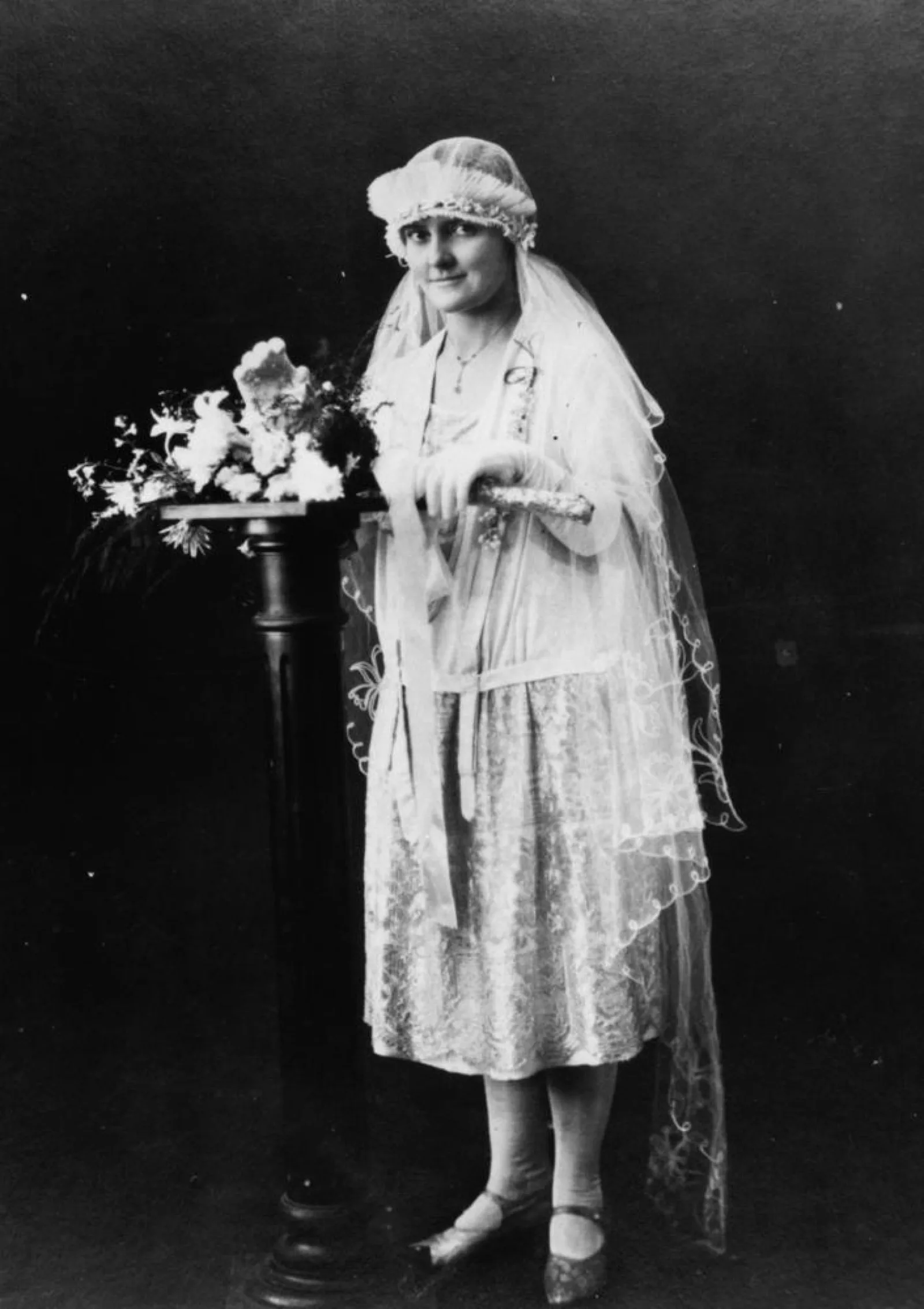
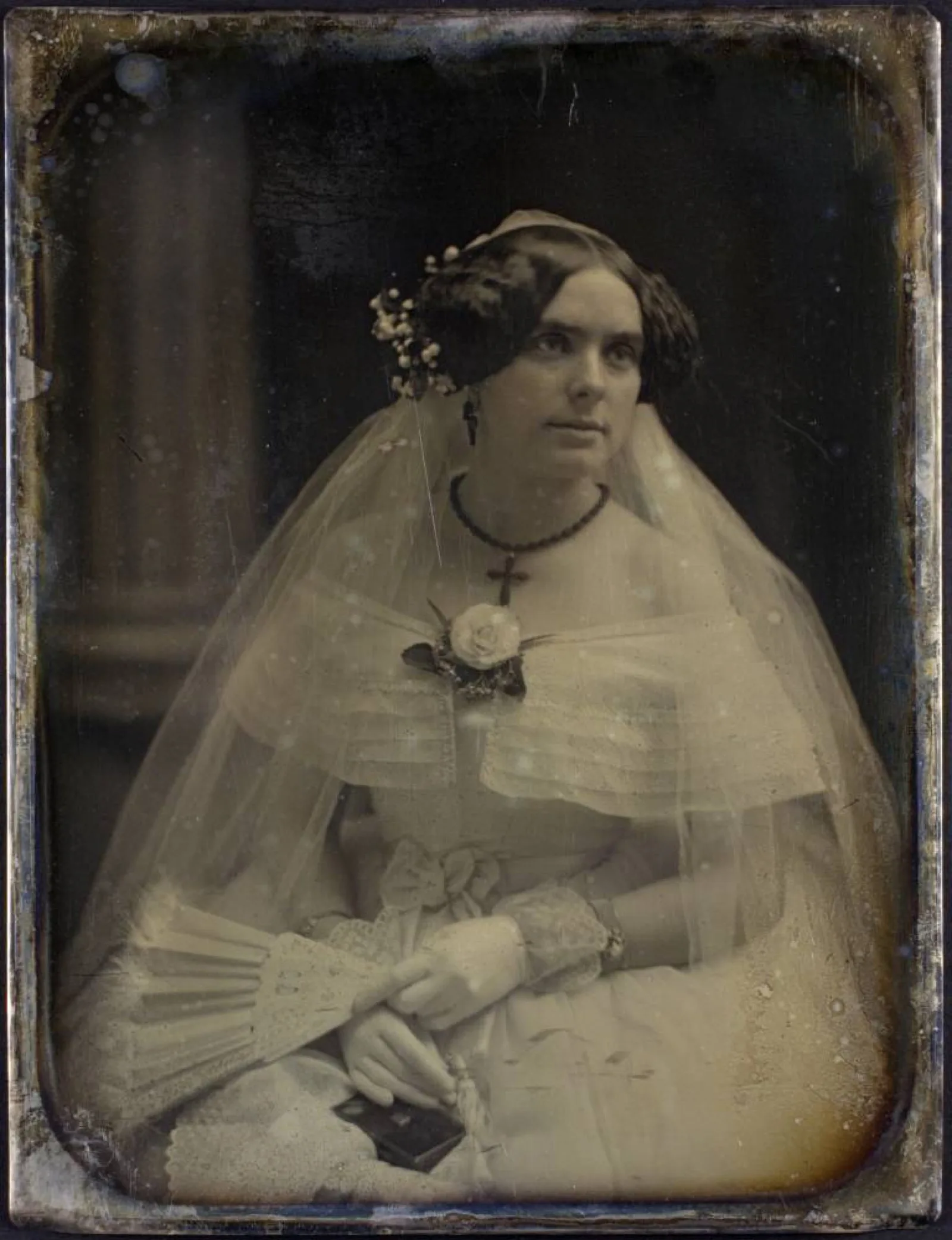
From Victorian England. The earliest print appearance is an 1871 magazine story with only three items: "something new, something borrowed, something blue." The four-item version turns up in an 1876 newspaper describing a Lancashire bride, already labeled "ancient custom." A folklorist in 1898 explained the old and blue as devices "to baffle the Evil Eye." The sixpence in the shoe is a later addition.
This is the tradition your mother can recite without thinking, and the one most likely to make her cry when you ask her for the "something old." It feels like it came down from the Middle Ages. It came down from a magazine.
.jpg)
.jpg)
1871: three things, not four
The earliest known print appearance is in a story called "Marriage Superstitions, and the Miseries of a Bride Elect," published in St James's Magazine in 1871, in which a bride-to-be is told that on her wedding day she must "wear something new, something borrowed, something blue."1 No "something old." That arrives in 1876, when a newspaper reported a Lancashire bride who wore, "according to ancient custom, something old and something new, something borrowed and blue."1 Five years old, and already ancient.
The rhyme spread the way rhymes do. A novel had "something old" by 1890.1 An 1898 folklore compilation recorded a Lancashire version alongside a Leicestershire one that still lacked the old.2
What the Victorians said it meant
Not what the bridal blogs say. When the folklorist William Crooke wrote the rhyme down in 1898, the something blue and the something old were "devices to baffle the Evil Eye."1 The something borrowed was more specific and less quaint: it "should properly be the undergarment of some woman who has been blessed with children," because "the clothes communicate fertility."1 The modern meanings, blue for fidelity, borrowed for borrowed happiness, new for optimism, come from wedding vendors and have no historical source behind them.3
And a sixpence in her shoe
The fifth line is not in the early versions. Plenty of Victorian sources give only the four items; some add "and a sixpence in her shoe," and the line settled in over time.1 Coins in shoes for luck are older than the rhyme; a sixpence in the shoe turns up in a seventeenth-century poem by Richard Corbet.1 The coin itself was introduced in 1551 under Edward VI and stayed in British pockets until it was demonetized in 1980.4 Which means a British bride's grandmother could put a working coin in her shoe. Her daughter had to have one saved for her. Yours will be a keepsake bought online, and it still counts.
Why your mother cares
Because it is a list, and a list is a job. Every item on it is a way for someone who loves you to hand you something on the morning of the day. Your grandmother's earrings are the old. A handkerchief lent by a friend is the borrowed, and if you read Crooke's version, borrowed from a friend who already has children is a blessing whether or not anyone says the word. The rhyme is a hundred and fifty years old. What it asks people to do is older than that: come to the house early, bring something small, and stay to see her off.
The rhyme was five years old when a newspaper called it ancient. Some things have always been sold that way.
Asked at the desk
How old is "something old, something new"?
The earliest print is 1871, with three items; the four-item form appears in 1876, described as a Lancashire custom.1
What does something blue mean?
In the 1898 folklore record, blue and old were charms against the Evil Eye. The "fidelity" meaning is a modern vendor gloss.13
Is the sixpence part of the original rhyme?
No. Many Victorian versions stop at four items; the sixpence line was added later, though coins in shoes for luck are much older.1
Can I still get a sixpence?
The coin was demonetized in 1980, so any sixpence now is a keepsake. Vintage ones are easy to find.4
The receipt
- Ellen Gutoskey, "The Forgotten Fifth Line of the ‘Something Old, Something New’ Bridal Poem," Mental Floss, on the 1871 St James’s Magazine story, the 1876 report, Beatrice Whitby (1890), William Crooke in Folklore (1898), and Richard Corbet. mentalfloss.com
- Wikipedia, "Something old," on the 1871 and 1876 attestations and the 1898 Lancashire and Leicestershire versions. en.wikipedia.org
- Wikipedia, "Wedding superstitions," whose only sources for the modern item meanings are wedding-vendor websites. en.wikipedia.org
- The Royal Mint (886), "The Sixpence in her Shoe Wedding Tradition," on the coin’s 1551 introduction and 1980 demonetization. 886.royalmint.com
Shelved 2026-09-05 · back to the wall